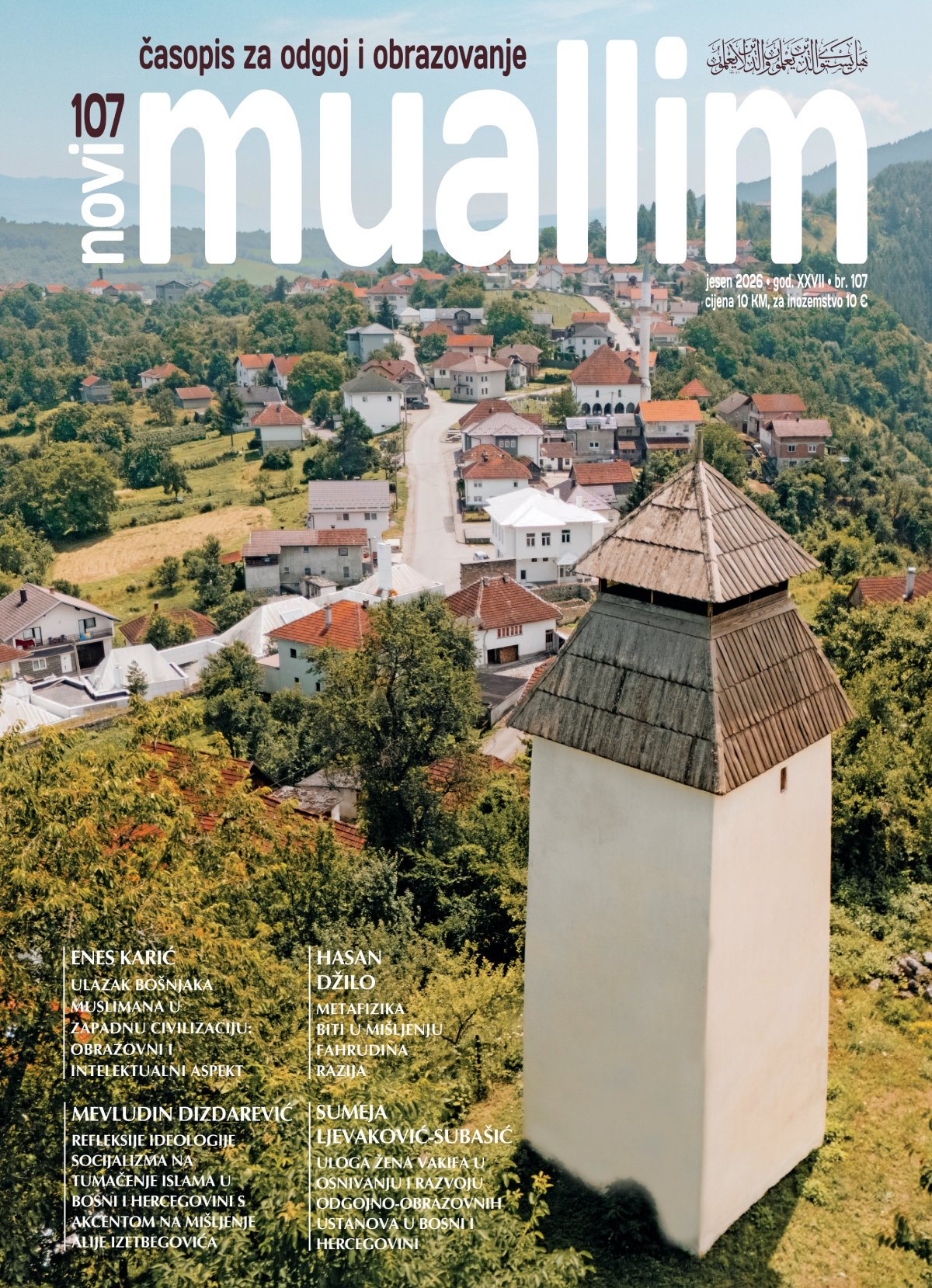
Reflections of Socialist Ideology on the Interpretation of Islam in Bosnia and Herzegovina, with Particular Reference to the Thought of Alija Izetbegović
DOI:
https://doi.org/10.26340/muallim.v27i107.2239Keywords:
Islam, socialism, Bosnia and Herzegovina, Alija Izetbegović, modernism, secularismAbstract
UDK
28:329.14:929 Izetbegović A.
Starting from the premise that the socio-political and ideological context significantly shapes ways of understanding religion, this paper examines various currents of Islamic thought that emerged under the conditions of socialist Yugoslavia. Particular attention is devoted to the socialist ideology’s approach to religion, the process of secularization and the social marginalization of Islam, as well as the ways in which Muslim authors responded to the challenges of atheism, modernization, and the dominant ideological discourse. An analysis of the relevant literature identifies three principal approaches to the relationship between Islam and socialism: criticism of socialist ideology; efforts to bring Islam and socialism closer together through the “socialization of Islam and Islamization of socialism”; and Alija Izetbegović’s approach, which understands Islam as a kind of “third way” and a synthesis between opposing ideological extremes. The paper demonstrates that Izetbegović’s Islamic thought was authentic, while at the same time being shaped, to a certain extent, by the intellectual and ideological context of socialist Yugoslavia, which he opposed.
Downloads
Published
How to Cite
Issue
Section
License

This work is licensed under a Creative Commons Attribution 4.0 International License.
Naknada:
a. Časopis ne naplaćuje naknadu za obradu članaka (APC) i naknadu za podnošenje članaka.
Autori koji objavljuju u ovom časopisu pristaju na sljedeće uvijete:
- Autori zadržavaju autorska prava i pružaju časopisu pravo prvog objavljivanja, pri čemu će rad jednu godinu po objavljivanju biti podložan licenci Creative Commons imenovanje koja omogućuje drugima da dijele rad uz uvijet navođenja autorstva i izvornog objavljivanja u ovom časopisu.
- Autori mogu izraditi zasebne, ugovorne aranžmane za ne-ekskluzivnu distribuciju rada objavljenog u časopisu (npr. postavljanje u institucionalni repozitorij ili objavljivanje u knjizi), uz navođenje da je rad izvorno objavljen u ovom časopisu.