
Islamic Education as a Means of Social Reform
DOI:
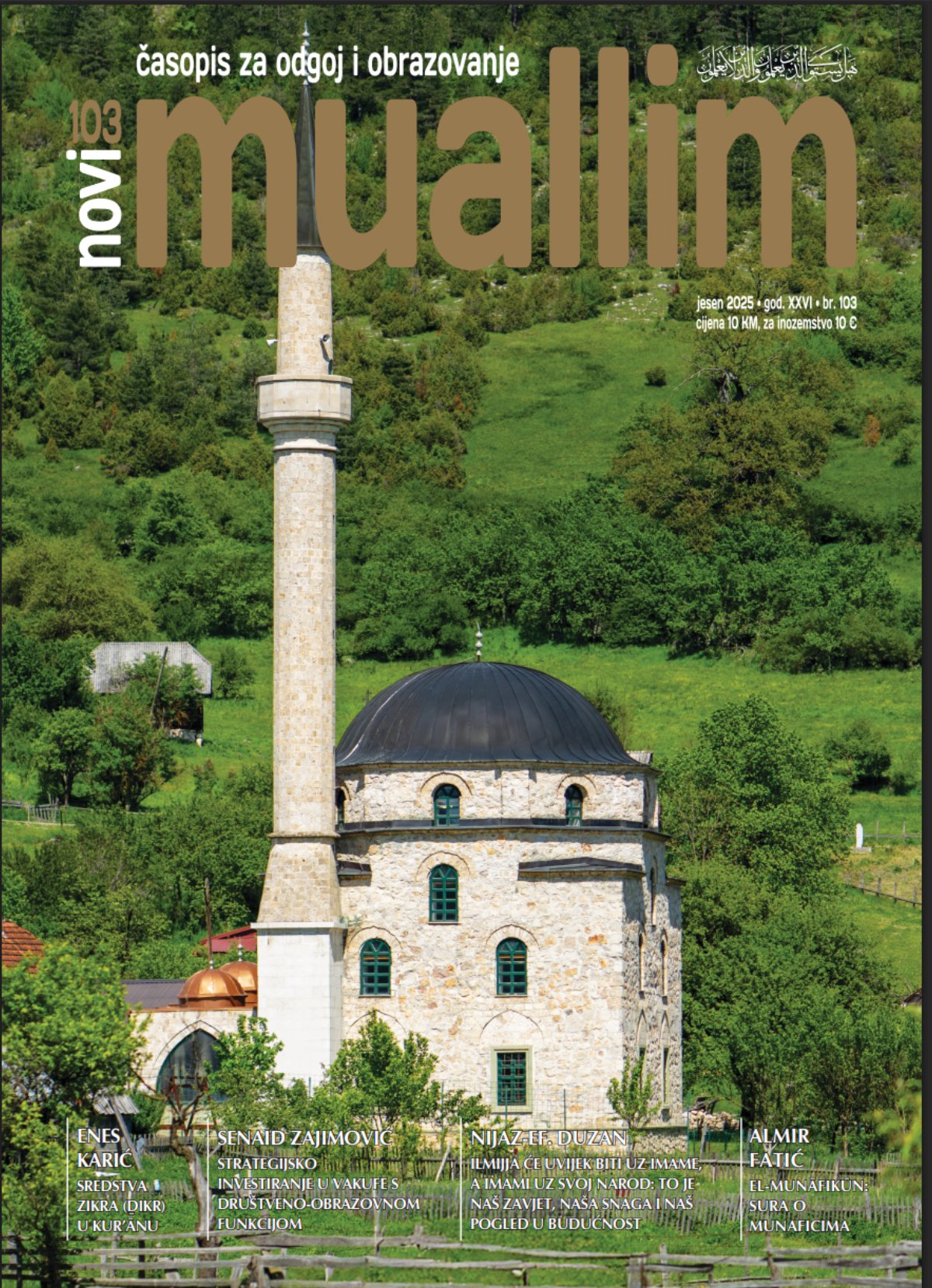
https://doi.org/10.26340/muallim.v26i103.2175Keywords:
Islamic education, social reform, fitra, moral responsibility, freedom of choiceAbstract
UDK
28-42
28-47
This paper explores the role of Islamic education in addressing contemporary social challenges such as moral relativism, identity crises, and societal polarization. The author begins with the premise that genuine social transformation begins with the inner transformation of the individual. Thus, Islamic education is not merely the transmission of religious knowledge, but a means of shaping moral consciousness and fostering collective responsibility. The study centers on three foundational principles of Islamic anthropology: fitra as the innate human disposition toward good, freedom of choice as a precondition for moral autonomy, and responsibility as the ultimate aim of education. Through an analysis of the roles played by the family, mosque, and educational institutions, the paper considers how Islamic education can strengthen social cohesion and prevent behavioral deviance. Drawing on both classical and contemporary scholars, the paper calls for a reinterpretation of Islamic values within pluralistic societies. In conclusion, it highlights the potential of Islamic education to serve as a stabilizing and transformative force in the construction of a more just and inclusive society.
Downloads
Published
How to Cite
Issue
Section
License

This work is licensed under a Creative Commons Attribution 4.0 International License.
Naknada:
a. Časopis ne naplaćuje naknadu za obradu članaka (APC) i naknadu za podnošenje članaka.
Autori koji objavljuju u ovom časopisu pristaju na sljedeće uvijete:
- Autori zadržavaju autorska prava i pružaju časopisu pravo prvog objavljivanja, pri čemu će rad jednu godinu po objavljivanju biti podložan licenci Creative Commons imenovanje koja omogućuje drugima da dijele rad uz uvijet navođenja autorstva i izvornog objavljivanja u ovom časopisu.
- Autori mogu izraditi zasebne, ugovorne aranžmane za ne-ekskluzivnu distribuciju rada objavljenog u časopisu (npr. postavljanje u institucionalni repozitorij ili objavljivanje u knjizi), uz navođenje da je rad izvorno objavljen u ovom časopisu.