
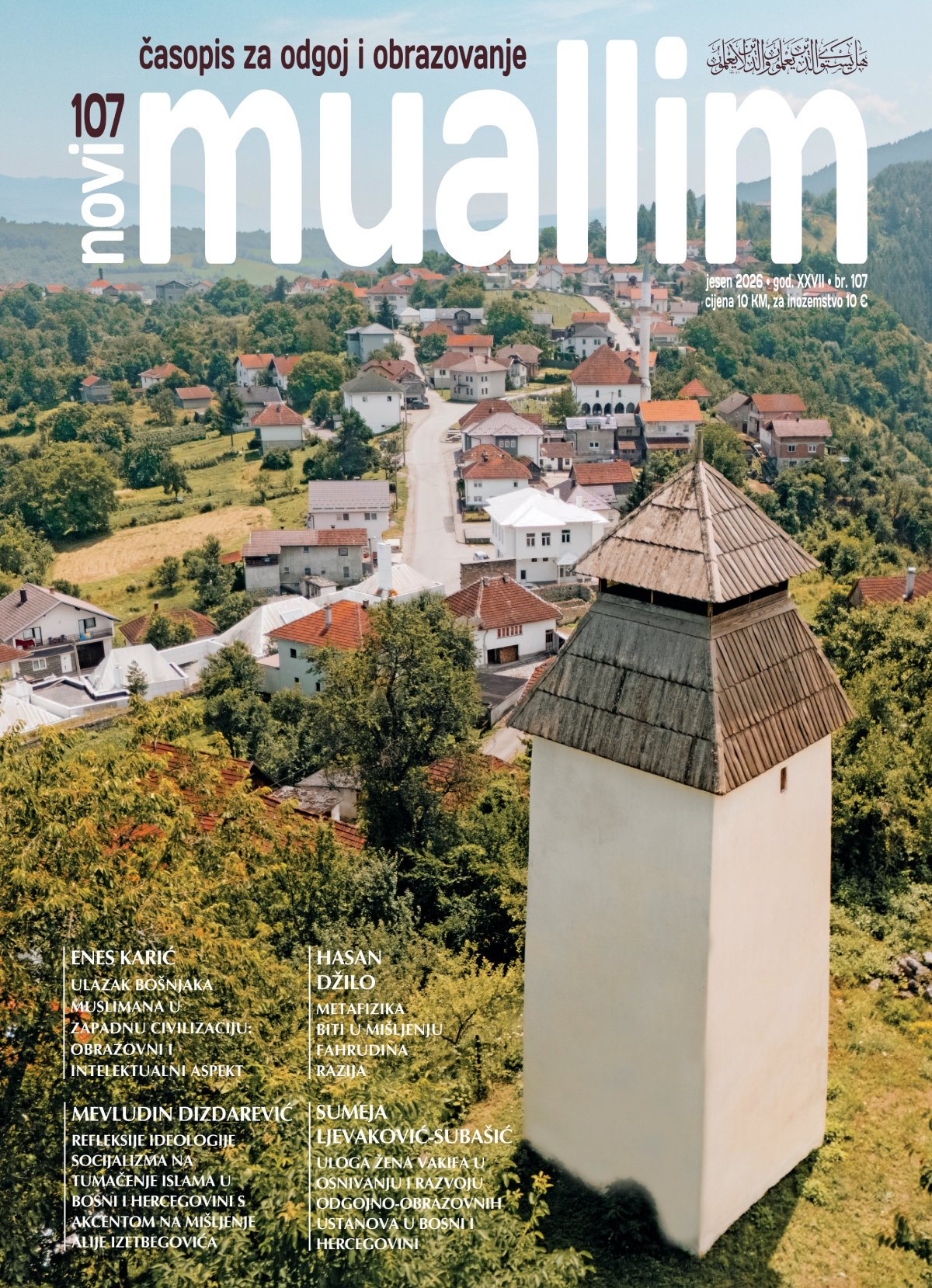
The Role of Contemporary Women in the Development of Waqf in Bosnia and Herzegovina: An Analysis of Attitudes toward Waqf and the Endowment of Property
DOI:
https://doi.org/10.26340/muallim.v27i107.2246Keywords:
waqf, contemporary woman, female waqif, waqf awareness, endowment, social responsibility, common good, Islamic CommunityAbstract
UDK
061.27:[28-055.2(497.6)
This paper analyzes the role of contemporary women in the development of waqf in Bosnia and Herzegovina, with particular attention to the level of waqf awareness, perceptions of the role of women as waqifas (female endowers), willingness to endow property, and the factors that encourage or hinder their more active involvement in waqf processes. The study seeks to examine the extent to which such awareness is present today and how it manifests itself under contemporary social conditions.
The empirical research was conducted among 231 respondents, of whom 228 were women of different ages, educational backgrounds, and marital statuses, including coordinators of the Department for Marriage and Family, activists, and jamaat members. Data collected through a survey questionnaire were analyzed using a combination of descriptive statistics (for closed-ended questions) and qualitative interpretation of textual responses.
The results indicate a high level of respondents’ familiarity with the concept of waqf, a positive attitude toward endowment, and a pronounced awareness of the importance of women’s role in the development of waqf and in strengthening awareness of social responsibility. At the same time, several barriers to women’s more active involvement were identified, including insufficient information about contemporary models and procedures of endowment, limited financial resources, and the insufficient visibility of women waqifs in the public sphere.
The findings confirm the need for systematic education, the promotion of women’s waqf heritage, and the development of contemporary models of endowment that would empower women not only to support existing initiatives but also to actively initiate, organize, and implement waqf projects. The paper concludes that contemporary Muslim women in Bosnia and Herzegovina represent a significant, yet still underutilized, potential for the revitalization and development of waqf by connecting a rich historical heritage with the needs of contemporary society for the common good of the community.
Downloads
Published
How to Cite
Issue
Section
License

This work is licensed under a Creative Commons Attribution 4.0 International License.
Naknada:
a. Časopis ne naplaćuje naknadu za obradu članaka (APC) i naknadu za podnošenje članaka.
Autori koji objavljuju u ovom časopisu pristaju na sljedeće uvijete:
- Autori zadržavaju autorska prava i pružaju časopisu pravo prvog objavljivanja, pri čemu će rad jednu godinu po objavljivanju biti podložan licenci Creative Commons imenovanje koja omogućuje drugima da dijele rad uz uvijet navođenja autorstva i izvornog objavljivanja u ovom časopisu.
- Autori mogu izraditi zasebne, ugovorne aranžmane za ne-ekskluzivnu distribuciju rada objavljenog u časopisu (npr. postavljanje u institucionalni repozitorij ili objavljivanje u knjizi), uz navođenje da je rad izvorno objavljen u ovom časopisu.