
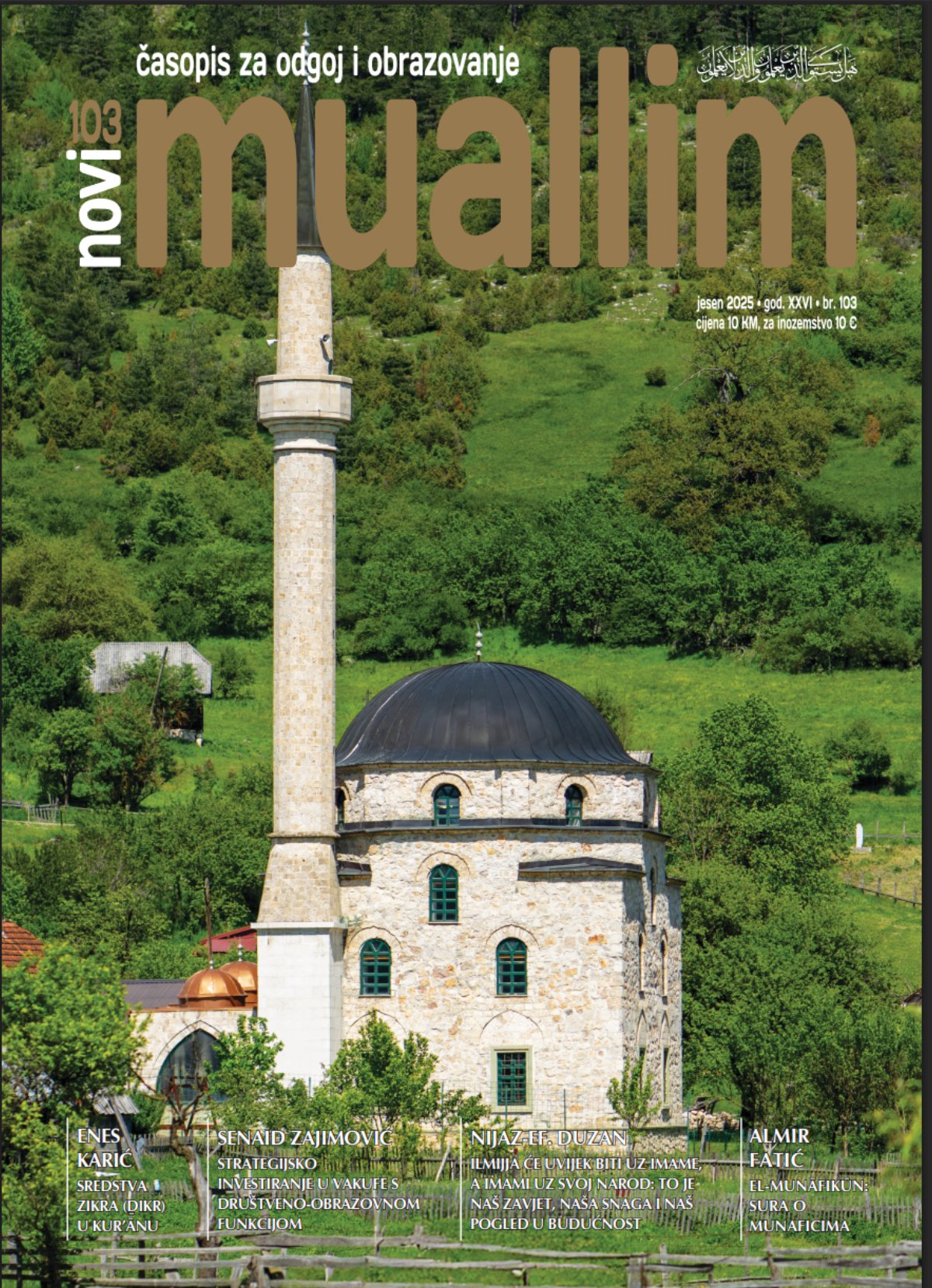
Means of Remembrance (ḏikr) in the Qur’an
DOI:
https://doi.org/10.26340/muallim.v26i103.2172Keywords:
Qur’an, ḏikr, human being, remembrance, wonder, āyāh or Divine signs, natural phenomena, sacred history of humanityAbstract
UDK
28-23-184.3-534.3
Remembrance of God (ḏikr) in the Qur’an represents one of the key concepts in Islam’s foundational scripture. Alongside terms derived from the root ʿayn–lām–mīm - conveying meanings such as “to know,” “to realize,” or “to learn”- the Qur’an frequently employs the word ḏikr, derived from the root ḏāl–kāf–rā, with meanings including “to remember,” “to take heed,” or “to draw a lesson.” Sūrah Ṣād (38:1) opens with a Divine oath: “By the Qur’an full of Remembrance!” (Wa l-Qur’āni ḏī ḏ-ḏikr!). The Qur’an applies terms derived from the root ḏ-k-r to a broad array of realms and dimensions: the Divine realm, the natural world in its spontaneity and splendor, the human being in moments of existential crisis, and the sacred monotheistic tradition... Yet the term ḏikr consistently points to a profound reminder: that human beings must remember God, recall the mystery of why the world exists, the mystery of creation and Divine signs; that they must remain mindful and alert to the demands of moral life and to be mindful of existence and mortality. In essence, ḏikr serves to awaken us to the ultimate mystery of God and the World, life and death.
Downloads
Published
How to Cite
Issue
Section
License

This work is licensed under a Creative Commons Attribution 4.0 International License.
Naknada:
a. Časopis ne naplaćuje naknadu za obradu članaka (APC) i naknadu za podnošenje članaka.
Autori koji objavljuju u ovom časopisu pristaju na sljedeće uvijete:
- Autori zadržavaju autorska prava i pružaju časopisu pravo prvog objavljivanja, pri čemu će rad jednu godinu po objavljivanju biti podložan licenci Creative Commons imenovanje koja omogućuje drugima da dijele rad uz uvijet navođenja autorstva i izvornog objavljivanja u ovom časopisu.
- Autori mogu izraditi zasebne, ugovorne aranžmane za ne-ekskluzivnu distribuciju rada objavljenog u časopisu (npr. postavljanje u institucionalni repozitorij ili objavljivanje u knjizi), uz navođenje da je rad izvorno objavljen u ovom časopisu.