
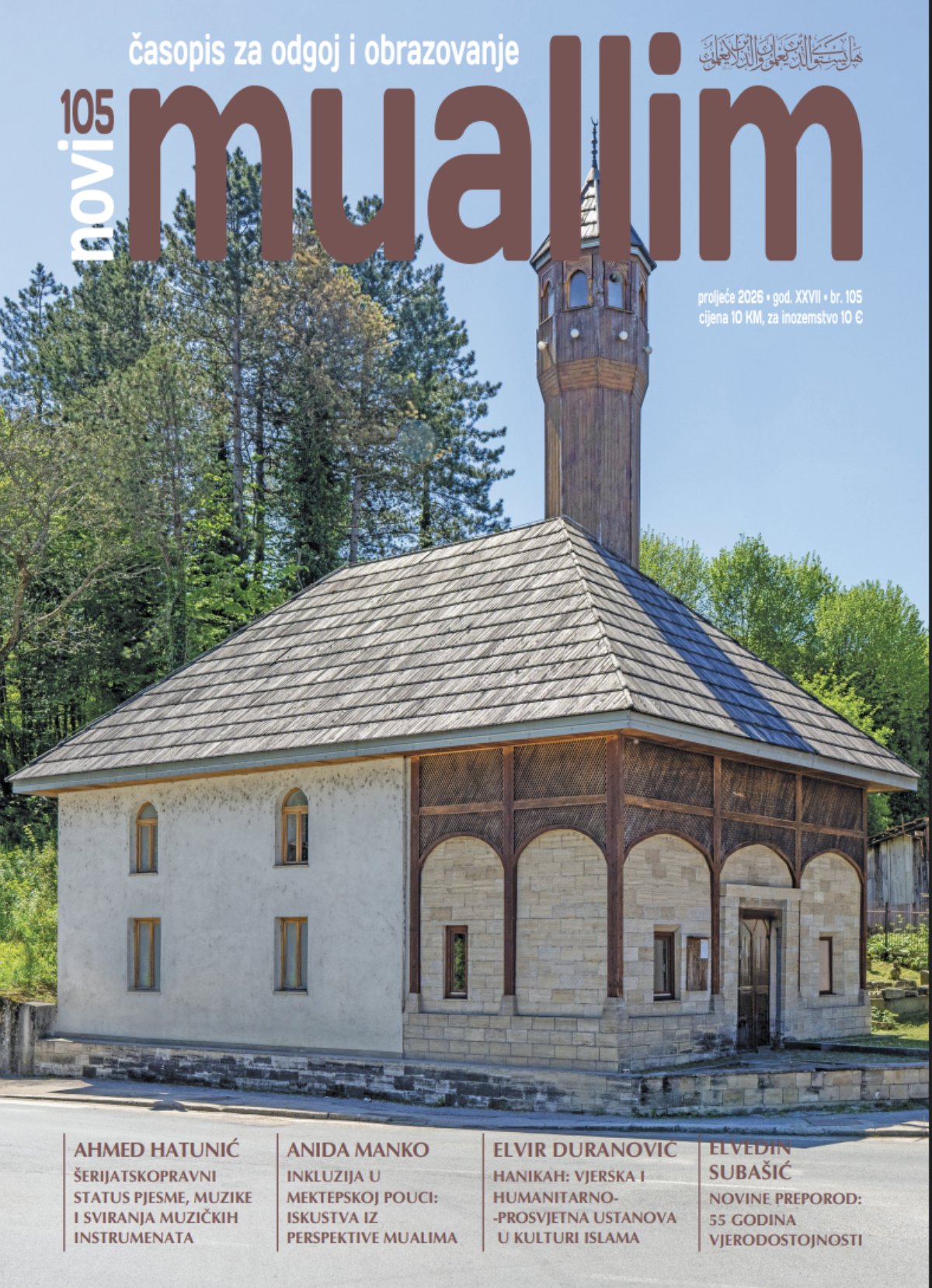
Hanikah: a religious and humanitarian-educational institution in the culture of Islam
DOI:
https://doi.org/10.26340/muallim.v27i105.2214Keywords:
hanikah, tasawwuf, Sufi, Islamic spirituality, Muslim cultureAbstract
UDK
28-788 (497.6)
28-523:726(497.6)
With the Ottoman conquest of Bosnia and Herzegovina, Islamic religious, educational, humanitarian, and social institutions were established, among them also the hanikah-an institution for housing sheikhs and Sufis, both permanent residents and travelers in search of knowledge-with the aim of their full dedication to prayer and dhikr, as well as to the study and spreading of the science of tasawwuf (science of gaining spirituality).
In the first part of the paper, on the basis of classical sources and contemporary research, the author presented the historical development of the institution of the hanikah in general within the culture of Islam and pointed to its fundamental humanitarian-educational purpose. Since in the treated literature, alongside the noun hanikah, other synonymous names appear-ribat, zawiya, and tekke-the author briefly explained each of the mentioned institutions in the continuation of the paper, indicating the common points and differences among them.
The internal organization of the hanikah, everyday life within it, and its significance for the study of tasawwuf and other Islamic sciences are discussed by the author in the continuation of the text. The final part of the paper speaks generally about the architecture of the hanikah and its spatial arrangement.
Downloads
Published
How to Cite
Issue
Section
License

This work is licensed under a Creative Commons Attribution 4.0 International License.
Naknada:
a. Časopis ne naplaćuje naknadu za obradu članaka (APC) i naknadu za podnošenje članaka.
Autori koji objavljuju u ovom časopisu pristaju na sljedeće uvijete:
- Autori zadržavaju autorska prava i pružaju časopisu pravo prvog objavljivanja, pri čemu će rad jednu godinu po objavljivanju biti podložan licenci Creative Commons imenovanje koja omogućuje drugima da dijele rad uz uvijet navođenja autorstva i izvornog objavljivanja u ovom časopisu.
- Autori mogu izraditi zasebne, ugovorne aranžmane za ne-ekskluzivnu distribuciju rada objavljenog u časopisu (npr. postavljanje u institucionalni repozitorij ili objavljivanje u knjizi), uz navođenje da je rad izvorno objavljen u ovom časopisu.